Proteins
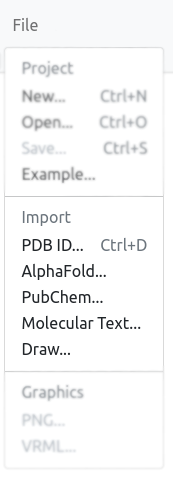
The File menu, shown below, contains several ways to import or load biomolecular structures into MolModa.
Protein Data Bank
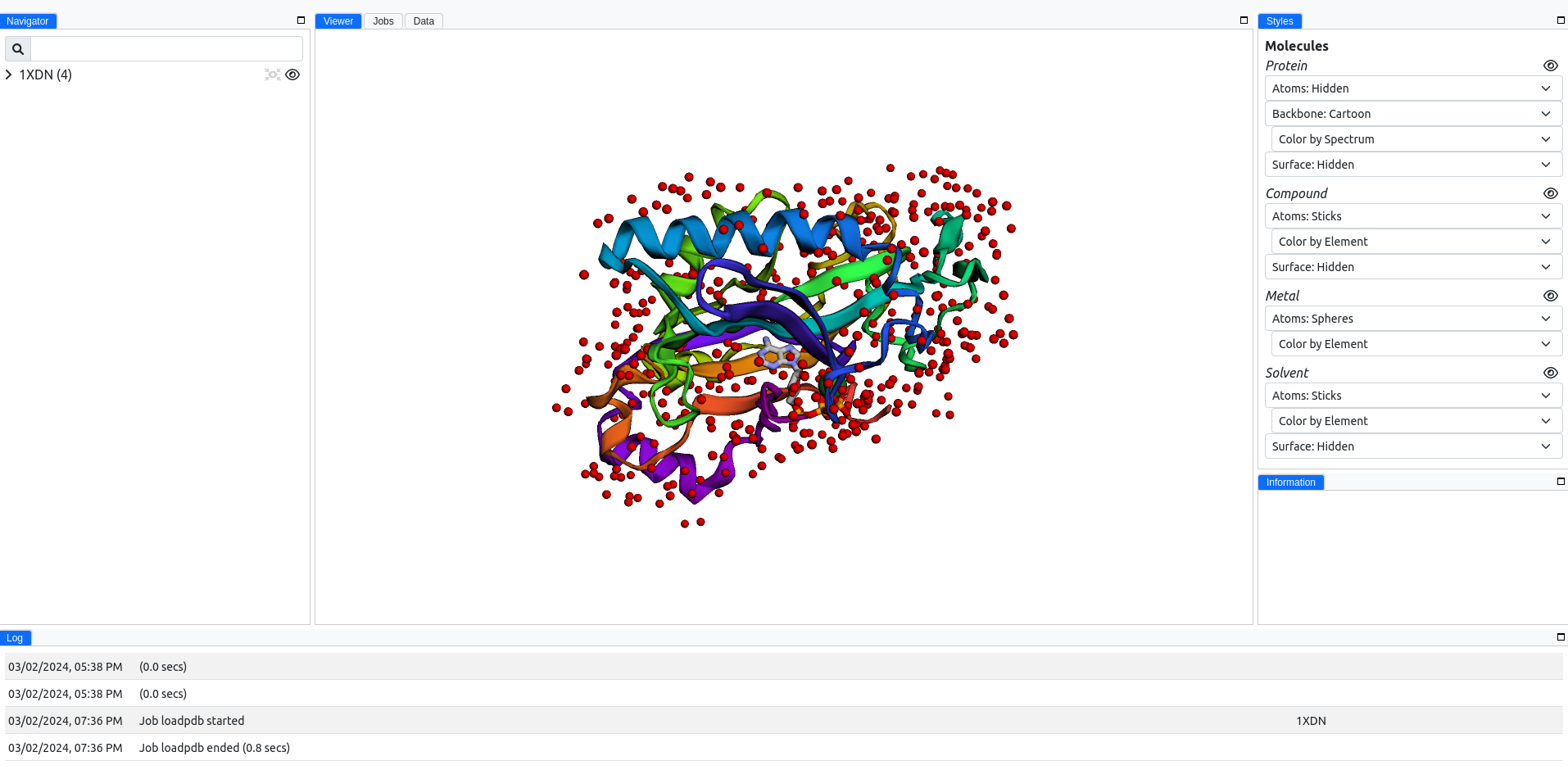
You can load structures directly from the Protein Data Bank (PDB) by clicking File Import Load PDB IDs (guided tour).

For example, we can load in 1XDN, a RNA editing ligase 1 from Trypanosoma brucei.
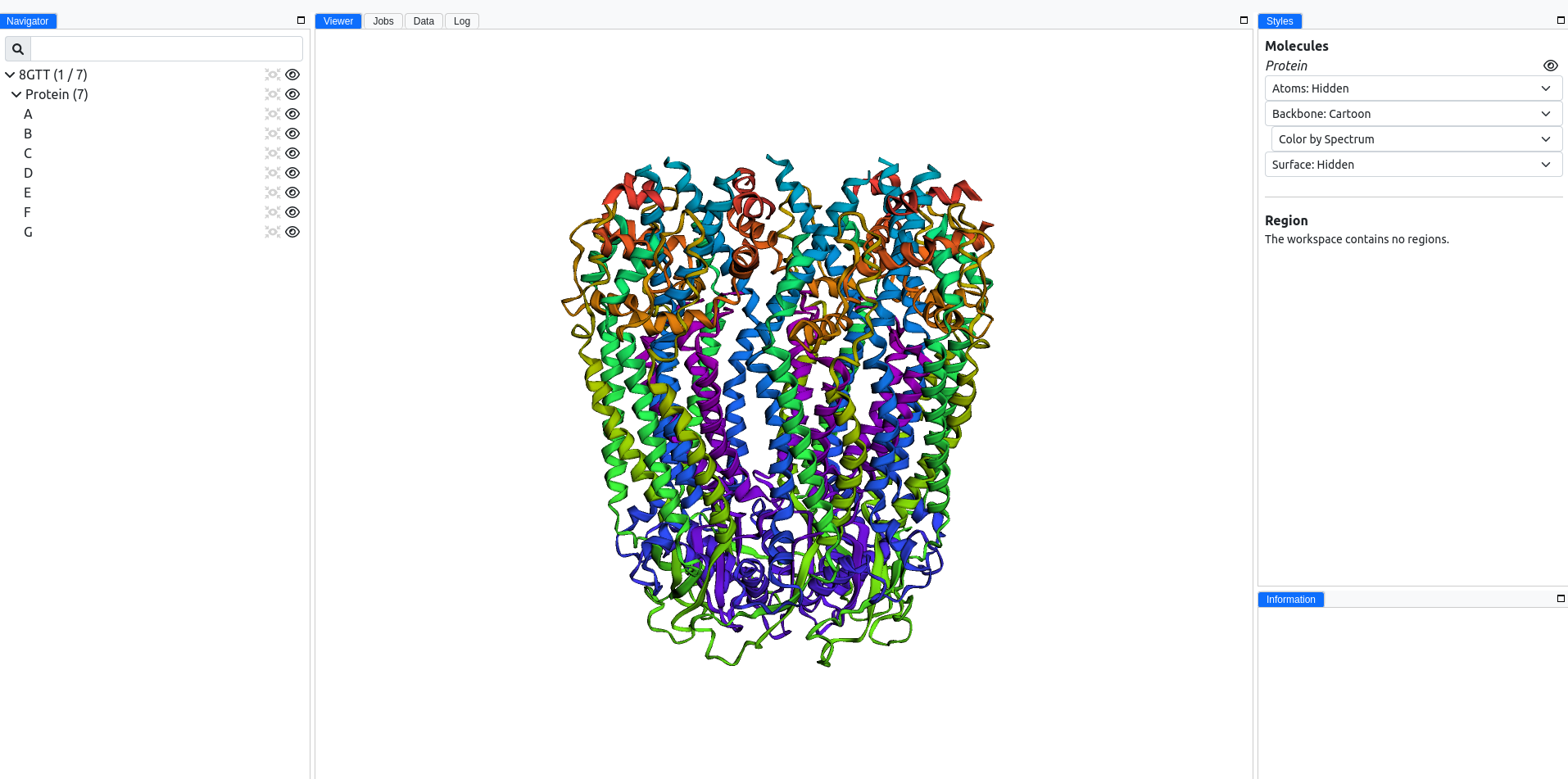
MolModa will automatically load all chains; 8GTT for example, will have all seven chains shown by expanding 8GTT in the Navigator.
AlphaFold
Not all structures are available in the PDB.
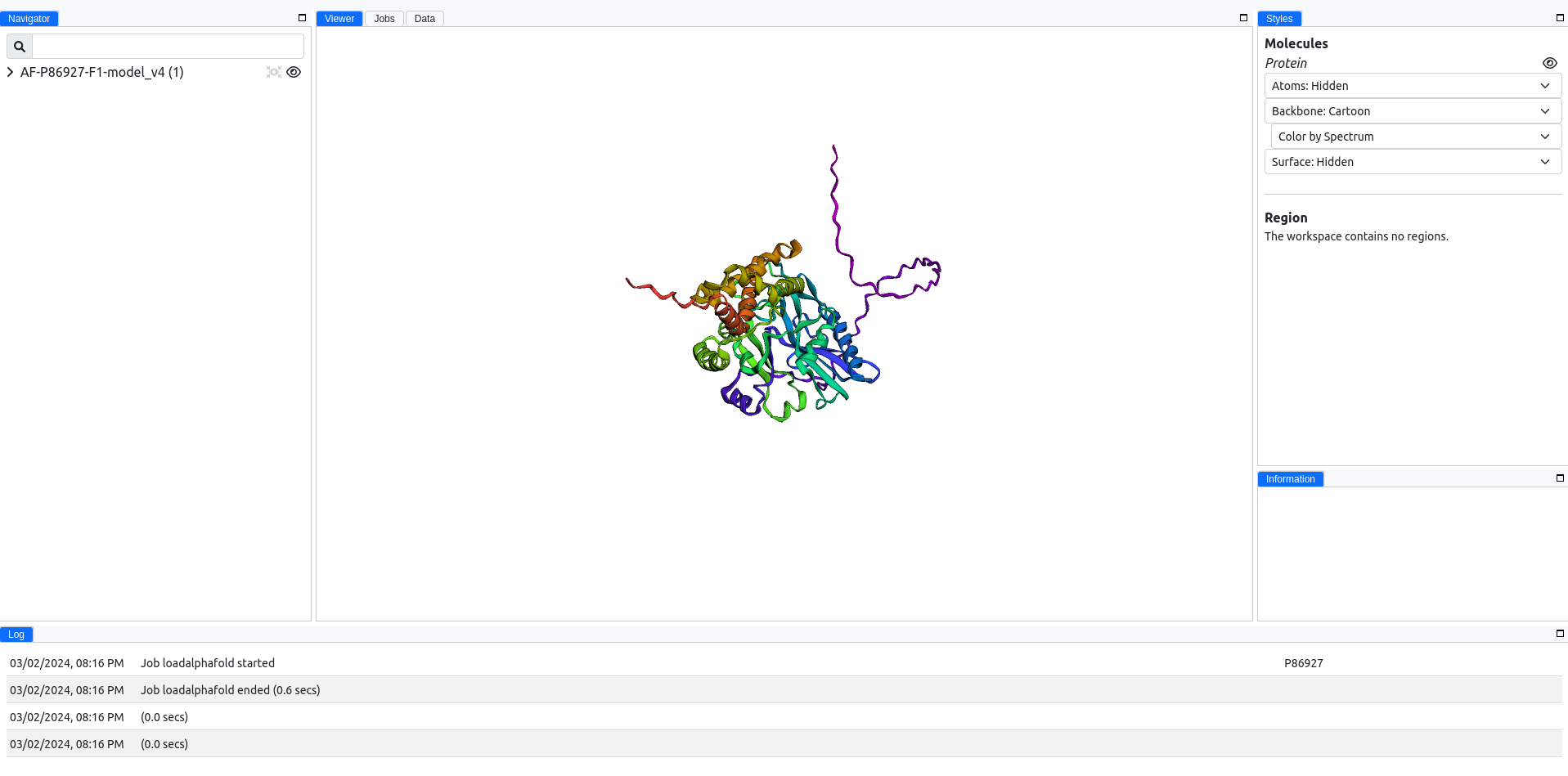
You can also load predicted structures directly from the AlphaFold Protein Structure Database by clicking File Import Load AlphaFold Structure (guided tour).
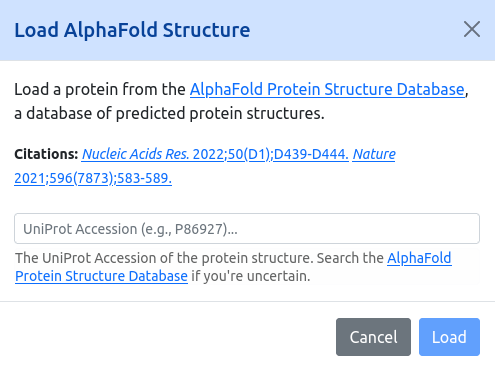
Let's load the same RNA-editing ligase, but from the AlphaFold Protein Structure Database. We do this by providing the UniProt accession number, P86927.
Finding similar proteins
If you have one protein and want to find related structures, use Proteins Find Similar Proteins. This runs an RCSB PDB sequence search and lets you load any of the hits without leaving the application. It's a useful way to build a small panel of homologs for comparison or cross-docking.
Aligning multiple proteins
When you have several related structures loaded, Proteins Align Proteins (guided tour) superimposes them onto a reference (template) structure. This makes structural comparison straightforward and ensures that subsequent operations (such as defining a shared docking region) are performed in a common coordinate frame.
Protonation
Crystallographic and predicted structures typically lack explicit hydrogens, and protonation states depend on pH. Proteins Protonate/Deprotonate Proteins (guided tour) assigns protonation states appropriate for the pH you specify, in preparation for docking or other downstream calculations.
Pocket detection
Once a protein is loaded and prepared, you can identify candidate binding sites with Proteins Pocket Detection (guided tour). Detected pockets appear in the Navigator and the Data panel, and can be used as the basis for a docking region. See the pockets section for details on the underlying method.